Revolutionizing Healthcare: The Impact of AI-Driven Custom Solutions on Patient Care and Operations

The integration of Artificial Intelligence (AI) into healthcare marks the advent of a transformative era, reshaping the landscape of patient care and healthcare operations. This article explores the multifaceted impact of AI-driven custom solutions on the healthcare industry, from enhancing diagnostic accuracy and patient management to optimizing operational efficiencies and predicting health outcomes. As we delve into the revolutionary applications of AI in healthcare, we uncover the potential of this technology to address challenges, reduce inefficiencies, and ultimately improve the quality and accessibility of health treatments for patients around the world.
Key Takeaways
- AI-driven solutions are enhancing diagnostic precision, enabling accurate disease detection, and facilitating the customization of treatment plans.
- Telemedicine is being transformed through AI integration, improving remote diagnostics, patient engagement, and continuity of care with virtual assistants.
- Healthcare operations are experiencing increased efficiency and reduced costs due to the automation of administrative tasks and AI advancements in electronic health records.
- Predictive analytics powered by AI are forecasting health outcomes and personalizing care, leading to early interventions and tailored healthcare strategies.
- The synergy between human expertise and AI is augmenting clinical decision-making, ensuring ethical considerations are met while improving patient outcomes.
Enhancing Diagnostic Precision and Patient Management
Leveraging AI for Accurate Disease Detection
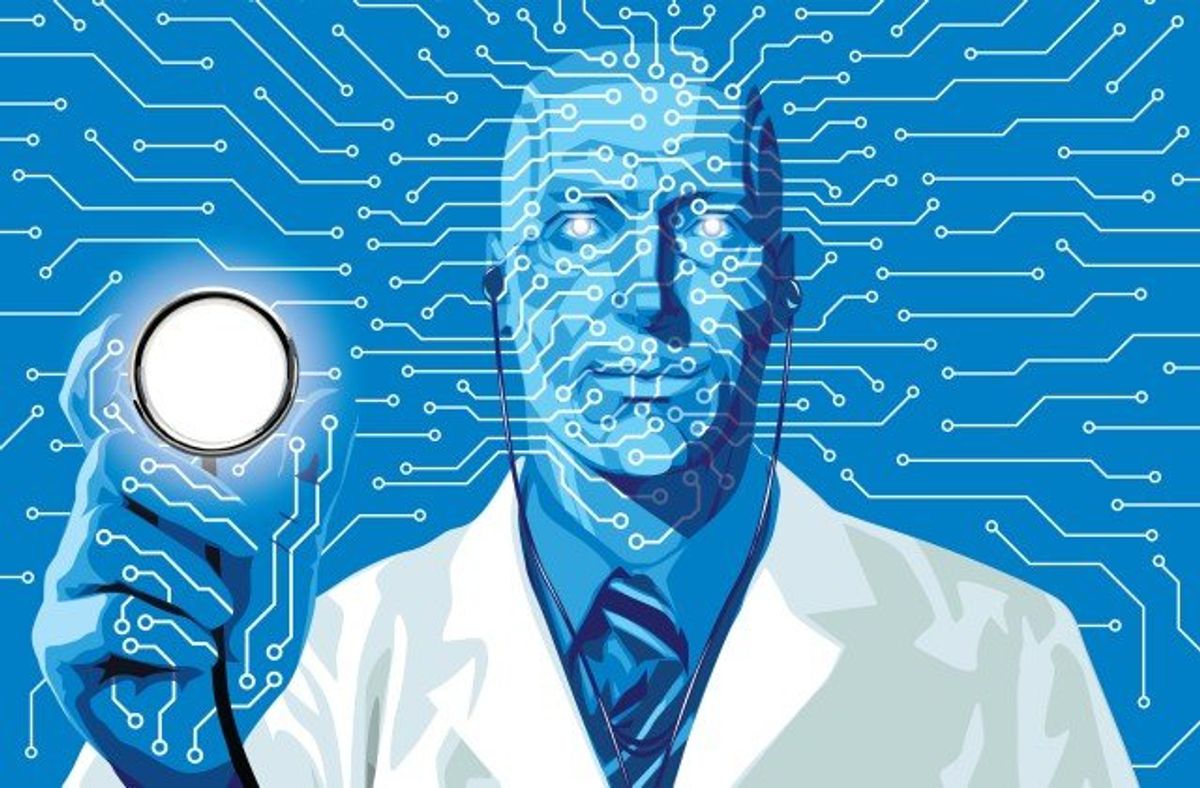
The advent of AI-Powered Medical Diagnostics is a game-changer in the realm of healthcare. Artificial Intelligence (AI) has become a cornerstone in the early detection of diseases, offering unparalleled capabilities to analyze vast datasets and identify patterns indicative of various health conditions. The primary strength of AI lies in its ability to process diverse information sources, from genetic and medical imaging data to electronic health records and wearable device insights.
The transformational effect of AI promises to shift healthcare paradigms from reactive therapies to proactive preventative strategies, enhancing the patient experience and alleviating the burden on healthcare systems.
AI's significant impact is evident through its sophisticated algorithms that enhance diagnosis accuracy, allowing health professionals to make more informed decisions. This leads to a shift from a one-size-fits-all approach to a more personalized and efficient healthcare delivery. As AI systems continue to learn and evolve, their diagnostic capabilities only improve, becoming an invaluable tool for proactive and preventive health measures.
Bles Software offers insights on AI, technology, and software solutions for businesses at different stages of growth. Articles by Stanislav Sorokin explore AI strategies for scalable growth and innovation. Embrace the future of healthcare by staying informed on the latest AI developments and their profound implications on patient care.
Customizing Treatment Plans with Machine Learning
In the realm of healthcare, the advent of machine learning heralds a new era of personalized medicine. By harnessing the power of patient-specific data, including genetics, medical histories, lifestyle, and previous treatments, machine learning algorithms unlock the potential to craft treatment plans that are not just effective but uniquely tailored to each individual's needs.
The true revolution lies in the ability of these algorithms to identify intricate patterns and connections that escape the human eye, paving the way for a healthcare experience that is both intimate and precise.
The benefits of such a bespoke approach are manifold:
- Precision: Targeted treatments that align with the patient's unique biological makeup.
- Efficacy: Enhanced likelihood of successful outcomes due to the specificity of the treatment.
- Adaptability: Continuous learning from real-world patient outcomes to refine and improve treatment strategies.
As machine learning models evolve, they not only improve existing therapies but also aid in the discovery of novel treatment avenues. The dynamic nature of these models ensures that they are constantly updated with the latest medical insights, offering a living, breathing solution to patient care. Embrace the change; let machine learning guide you to a future where healthcare is not just a service, but a personalized journey towards well-being. Your health deserves the precision of AI-driven care—step into the future with us.
Streamlining Patient Data Analysis through AI
The advent of AI in Patient Care Technology is transforming the landscape of healthcare data analysis. AI Healthcare Data Analysis tools are now pivotal in reducing the complexities of clinical data, enabling healthcare professionals to navigate the vast sea of information with unprecedented ease. AI's sophisticated algorithms are not only enhancing the accuracy of diagnoses but are also crucial in the development of Personalized Medicine AI Technology.
AI for Medical Imaging has revolutionized the way we interpret diagnostic images. By employing machine learning, AI systems can detect subtle abnormalities in X-rays and MRIs, which might be overlooked by the human eye. This level of precision is instrumental in crafting treatment plans that are tailored to the individual needs of patients, thereby elevating the standard of patient care to new heights.
The impact of AI on healthcare operations is quantifiable. Consider the following table showcasing the reduction in time spent on data analysis before and after AI integration:
| Task | Time Before AI (hours) | Time After AI (hours) |
|---|---|---|
| Data Entry | 10 | 2 |
| Image Analysis | 5 | 1 |
| Treatment Planning | 8 | 3 |
The synergy between AI and healthcare professionals is creating a future where data-driven decisions are made swiftly, ensuring that patients receive the most effective care without delay.
As we continue to witness the benefits of AI-driven custom solutions in healthcare, it is imperative that we embrace these advancements. The integration of AI is not just a technological upgrade; it is a commitment to patient-centered care, where every decision is informed by data and every treatment plan is as unique as the individual receiving it. Let us move forward together, harnessing the power of AI to deliver care that is not only efficient but also deeply personal and responsive to the needs of each patient.
Transforming Telemedicine with AI Integration

Facilitating Remote Diagnostics and Consultations
The advent of AI Telemedicine Advancements has been a cornerstone in bridging the divide between healthcare providers and patients, especially in underserved regions. AI's integration into telehealth platforms not only enhances the accessibility of healthcare services but also fills critical gaps in healthcare delivery. This is particularly transformative for rural or isolated areas, where medical resources are often scarce.
AI-driven telemedicine is reshaping patient engagement by providing tools that allow for continuous interaction and personalized health management. For instance:
- AI algorithms analyze patient data during virtual visits, aiding in diagnostics and treatment planning.
- Wearable devices and sensors, combined with AI-powered EMR and EHR software, enable real-time health data collection and analysis.
- Virtual healthcare assistants, powered by AI, offer timely assistance and information, improving the patient-healthcare provider relationship.
The impact of these innovations is profound, offering a more patient-focused approach that transcends geographical barriers. By recognizing early warning signs and facilitating early intervention, AI telemedicine is instrumental in preventing complications and reducing hospital readmissions.
In the era of digital health, AI is not just an add-on but a fundamental component that is redefining the very fabric of patient care and healthcare accessibility.
As we continue to witness the transformative power of AI in healthcare, it is imperative to stay informed and engaged with the latest developments. Embrace the change, and be part of the revolution that is making healthcare more inclusive, efficient, and patient-centric.
Improving Patient Engagement and Self-Management
In the realm of healthcare, patient engagement and adherence are pivotal for achieving successful outcomes. AI-driven analytics not only enhance customer engagement but also foster brand loyalty and competitive advantage through speed, personalization, and consistency. For healthcare providers, this translates into patients who are more involved and committed to their care plans, leading to better management of chronic and acute conditions.
AI technologies are seamlessly integrating into telehealth systems, offering remote consultations and continuous support. This is particularly beneficial for individuals with mobility issues or those residing in remote locations. AI-driven mobile apps are revolutionizing self-management by providing personalized exercise routines, dietary advice, and medication reminders, thus generating an attitude of confidence and consciousness about health.
By fostering active patient participation through targeted content and nuanced interventions, AI is addressing the challenge of non-compliance and enhancing the overall healthcare experience.
The table below illustrates the impact of AI on patient engagement:
| Aspect | Impact of AI on Patient Engagement |
|---|---|
| Personalized Care Plans | Increased adherence to treatments |
| Remote Health Monitoring | Improved access and continuity |
| Self-Management Tools | Empowered patients with actionable insights |
Embracing AI is not just a strategic move for growth and survival in the data-driven world; it is a necessity for healthcare providers aiming to improve patient outcomes. As we continue to witness the transformative power of AI in healthcare, it is clear that the synergy between technology and patient-centric care is the cornerstone of modern medicine. Let us commit to this advancement, ensuring that every patient receives the personalized attention they deserve.
Ensuring Continuity of Care through Virtual Health Assistants
The integration of AI-driven virtual health assistants into healthcare systems marks a pivotal shift in patient care delivery. These sophisticated tools are not just futuristic concepts but are actively enhancing patient engagement and streamlining administrative workflows. By providing personalized guidance, medication reminders, and even emotional support, virtual health assistants are redefining the patient experience.
Virtual health assistants, through their ability to learn from vast data sets and user interactions, are instrumental in personalizing healthcare. They ensure that patients receive consistent care, even outside the traditional clinical setting.
Moreover, the synergy between virtual health assistants and telehealth platforms has bridged the gap in healthcare accessibility. Patients in remote locations now have the luxury of consultations at their fingertips, ensuring that no one is left behind in receiving quality care. The table below illustrates the multifaceted benefits of virtual health assistants:
| Benefit | Description |
|---|---|
| Personalized Care | Tailored health information and activities based on individual patient data. |
| Administrative Efficiency | Simplified scheduling, prescription refills, and insurance queries. |
| Emotional Support | Provision of companionship and mental health assistance. |
However, the rise of these AI-powered entities brings forth ethical considerations. The balance between their convenience and the imperative to protect patient data is a cornerstone for maintaining trust in their application. As AI-driven success stories showcase transformative power in business, the strategic integration of virtual health assistants is essential for growth and service optimization in healthcare.
In conclusion, virtual health assistants are not just a convenience but a necessity in the modern healthcare landscape. They are the linchpins in ensuring continuity of care, and their evolution will undoubtedly shape the future of patient management. Embrace the change and be part of the revolution that is setting new standards in healthcare delivery.
Optimizing Healthcare Operations with AI-Driven Innovations

Automating Administrative Tasks to Enhance Efficiency
The advent of Healthcare AI Development has ushered in a new era of operational prowess within the healthcare sector. AI for Healthcare Efficiency is not just a buzzword; it's a transformative force that redefines the administrative landscape. AI in Healthcare Management Systems is pivotal in automating routine tasks, thereby freeing up valuable time for healthcare professionals to focus on patient care.
AI-powered analytics drive operational excellence by streamlining processes, optimizing efficiency, and enhancing decision-making through predictive insights and resource allocation. This shift towards automation is not merely about replacing human effort but enhancing it. By minimizing errors and reducing the administrative burden, AI enables healthcare providers to concentrate on what truly matters—the patient.
The integration of AI into healthcare administration is a testament to the potential of technology to improve not only the efficiency but also the humanity of care.
Consider the following benefits of administrative automation in healthcare:
- Reduction in manual errors: Ensuring accuracy in patient records and billing.
- Time savings: Allowing healthcare professionals to dedicate more time to patient care.
- Cost efficiency: Optimizing resource allocation and cutting down on unnecessary expenses.
As we continue to explore the vast potential of AI, it is clear that the synergy between human expertise and artificial intelligence holds the key to a more efficient, effective, and empathetic healthcare system. Let us embrace this revolution, for it is in our collective interest to foster an environment where technology serves humanity, not the other way around.
Advancing Electronic Health Records with AI Capabilities
The integration of AI in Healthcare Innovation is reshaping the landscape of patient data management. AI Healthcare Solutions Providers are at the forefront, enhancing Electronic Health Records (EHRs) with machine learning algorithms that not only improve the accuracy and efficiency of data processing but also unearth invaluable insights from extensive patient databases. This evolution in AI Medical Records Management is pivotal for the detection of health trends and correlations that were once elusive.
The transformative power of AI within EHRs is a journey towards an intelligent healthcare system where technology serves the needs of both healthcare professionals and patients, addressing the intricate balance between data security and the necessity for interoperable standards.
AI-Enabled Healthcare Devices, integrated with EHR systems, are enabling personalized medicine like never before. By incorporating patient-specific information such as genetic profiles, medical histories, and lifestyle factors, AI is revolutionizing the way diseases are diagnosed and treatments are tailored. The table below illustrates the impact of AI on key aspects of EHRs:
| Aspect | Impact of AI Integration |
|---|---|
| Data Accuracy | Enhanced by predictive analytics |
| Efficiency | Streamlined through automation |
| Personalized Care | Improved with tailored treatment plans |
| Data Security | Strengthened with advanced protocols |
As we continue to witness the Professional API integration services that facilitate these advancements, it is clear that the future of healthcare is being written today. The call to action is unequivocal: embrace AI-driven custom solutions to revolutionize patient care and operations.
Reducing Healthcare Costs through Intelligent Process Optimization
The integration of Artificial Intelligence (AI) in healthcare is not just a futuristic concept; it's a present-day reality that is reshaping the financial landscape of the medical field. AI-driven data analysis offers operational excellence, competitive advantage, and enhanced productivity through streamlining processes. Expert guidance is key for success in the transformative AI journey.
Efficient revenue cycle management is one of the cornerstones of cost reduction in healthcare. AI facilitates this by:
- Automating payment processing and detecting legal errors
- Streamlining insurance claims
- Optimizing resource allocation through predictive analytics
By reducing the manual workload and minimizing errors, AI not only cuts costs but also allows healthcare professionals to focus on what truly matters—patient care.
In the grand scheme, AI's role in automating administrative duties is pivotal. It consolidates operations, making them more efficient and improving overall efficiency in a field characterized by complex processes and documentation. The result is a more health-focused environment, where increased communication and better health coordination lead to more effective outcomes in healthcare.
As we continue to witness the transformative impact of AI on healthcare operations, it's imperative to embrace these changes. The journey towards operational excellence is a collaborative one, requiring the harmonization of technology and human expertise. Let's embark on this path together, optimizing healthcare for the benefit of all.
Predictive Analytics: Forecasting Health Outcomes and Personalizing Care
Utilizing Predictive Models for Early Disease Intervention
The advent of AI in healthcare has ushered in a new era of predictive analytics, a transformative tool that empowers clinicians to anticipate and mitigate health risks before they burgeon into more severe conditions. Predictive models analyze a myriad of data points, from demographic information to detailed medical histories, crafting a nuanced risk profile for each patient. This proactive approach is not only a leap forward in patient care but also a strategic maneuver in resource management.
By harnessing the power of AI, healthcare providers can identify high-risk patients with unprecedented precision, enabling timely and targeted interventions. This is not just about averting crises; it's about redefining the paradigm of preventive medicine.
Here's how predictive analytics is making a difference:
- Risk Stratification: Pinpointing patients at risk of complications or readmissions.
- Chronic Disease Management: Forecasting disease progression to tailor preventive strategies.
- Resource Optimization: Allocating medical resources more effectively to where they are needed most.
The integration of AI into diagnostic and screening processes not only accelerates the pace of care but also enhances its accuracy, leading to a significant shift in early disease identification and management. As we continue to witness the benefits of AI-driven predictive analytics, it is crucial to stay informed and engaged with the latest developments. Embrace the change, and be part of the revolution that is shaping the future of healthcare.
Tailoring Healthcare Strategies with Prescriptive Analytics
In the realm of healthcare, prescriptive analytics stands as a beacon of hope, guiding us towards a future where medical care is not just reactive, but proactively transformative. By harnessing the power of predictive models, healthcare providers can anticipate patient needs and tailor strategies that are both effective and personalized. This approach not only enhances patient outcomes but also elevates the entire healthcare experience.
The integration of prescriptive analytics into healthcare strategies marks a pivotal moment in our journey towards a more predictive and personalized medicine paradigm. It empowers clinicians to make informed decisions, ensuring that each patient receives the most suitable care pathway.
Consider the following benefits of prescriptive analytics in healthcare:
- Risk Stratification: Identifying patients at risk of complications allows for targeted care and optimized resource allocation.
- Resource Optimization: Forecasting admission rates to prepare for demand and distribute staff effectively.
- Chronic Disease Management: Predicting disease progression to devise preemptive strategies.
By embracing these analytics-driven approaches, healthcare systems can achieve a level of precision and efficiency previously unattainable. The call to action is clear: we must continue to innovate and integrate these powerful tools to revolutionize patient care and operations.
Monitoring Patient Health Trends with Predictive Algorithms
The advent of Predictive Analytics in Healthcare AI has ushered in a new era of patient care, where the focus is on preemptive action rather than reactive response. By harnessing the power of AI-driven analytics, healthcare providers can now anticipate patient health trends with remarkable accuracy. This foresight is not just about predicting outcomes; it's about crafting a healthcare journey that is as individual as the patients themselves.
Predictive models, fueled by machine learning algorithms, are at the forefront of this transformation. They analyze vast arrays of data, from demographic information to medical histories and social determinants of health, to identify patients at high risk. This analysis allows for early interventions, which can significantly alter the course of a patient's health trajectory.
The transformational effect of AI in this field promises to shift healthcare paradigms away from reactive therapies towards proactive preventative strategies.
The benefits of predictive analytics extend beyond individual patient care. They play a pivotal role in resource optimization within healthcare facilities. By predicting disease outbreaks and patient deterioration, healthcare systems can allocate resources more effectively, reducing unnecessary hospitalizations and improving bed management. The table below illustrates the impact of predictive analytics on healthcare operations:
| Aspect | Before Predictive Analytics | After Predictive Analytics |
|---|---|---|
| Disease Outbreaks | Reactive Measures | Proactive Planning |
| Patient Deterioration | Delayed Intervention | Early Intervention |
| Resource Utilization | Inefficient Allocation | Optimized Allocation |
As we continue to navigate the complexities of healthcare, the integration of AI-driven analytics revolutionizes not only patient engagement but also the entire healthcare landscape. The strategic investment in AI technologies enhances understanding, loyalty, and ultimately, the quality of care provided. It's time to embrace the predictive power of AI and transform the future of healthcare. Join us in this journey towards a healthier tomorrow.
Synergizing Human Expertise and AI in Clinical Decision-Making
Augmenting Physician Decision-Making with AI Insights
The integration of AI into healthcare is not just about the technology; it's about the synergy between human intuition and machine intelligence. AI tools, such as those developed by Lydonia Technologies, are not replacements for physicians but rather powerful allies that drive operational efficiency and enhance decision-making. This collaboration allows healthcare professionals to deliver care that is both high-tech and high-touch.
AI's role in diagnosis and treatment planning is pivotal. By analyzing vast amounts of data, including electronic patient records and diagnostic images, AI systems can detect abnormalities that may be missed by the human eye. Here's how AI is transforming the landscape:
- Early Disease Detection: Sophisticated algorithms identify patterns indicative of disease.
- Treatment Personalization: Machine learning tailors treatment plans to individual patient data.
- Workflow Optimization: Streamlining processes to focus on patient care rather than administrative tasks.
The paradigm shift in healthcare is clear as AI empowers health professionals to make more well-informed decisions, leading to improved patient outcomes and quality of life.
As we continue to witness the improved accessibility to healthcare with AI's assistance, it is crucial to maintain a balance. The collaboration between human healthcare providers and AI systems ensures that the warmth of human touch remains at the forefront of patient care. Embrace the change, and let us guide you through the revolution in healthcare. Join us in this journey to a smarter, more efficient, and compassionate healthcare system.
Collaborative Diagnostics: Combining AI and Medical Expertise
The synergy between human intellect and AI in Clinical Decision Support is reshaping the landscape of healthcare diagnostics. AI's capacity to sift through and analyze vast datasets complements the nuanced judgment of medical professionals. This partnership is particularly evident in diagnostic imaging, where AI algorithms not only enhance the accuracy of interpretations but also empower radiologists to focus on intricate cases, thus elevating the standard of patient care.
The convergence of Big Data and AI technologies enables organizations to transform data into actionable insights, driving growth and innovation. AI-driven analytics revolutionize industries, emphasizing the importance of integrating AI into business operations.
Education and training initiatives are crucial in this collaborative environment. They ensure that healthcare professionals are well-versed in AI capabilities, fostering an interdisciplinary approach that maximizes the benefits of AI without compromising the human touch that is so vital to patient care. By merging the strengths of AI with the insights of healthcare practitioners, we are witnessing a transformative era in clinical diagnostics—one that promises enhanced precision, efficacy, and patient outcomes.
Call to Action: Embrace the future of healthcare by understanding and integrating AI in Clinical Decision Support. Join us in this journey to revolutionize patient care and operations, where human expertise and artificial intelligence work hand in hand to deliver unparalleled healthcare experiences.
Ethical Considerations in AI-Assisted Healthcare
As we embrace the transformative power of AI in healthcare, it is imperative to uphold the highest ethical standards. The integration of AI into healthcare systems demands a vigilant approach to ensure unbiased analytics, transparency, fairness, and the protection of data privacy. To mitigate bias in AI models and achieve equitable outcomes, continuous scrutiny and refinement of algorithms are essential.
- Embrace ethical AI practices for unbiased analytics, transparency, fairness, and data privacy.
- Mitigate bias in AI models for equitable outcomes.
- AI integration requires ethical considerations and vigilance.
The journey towards ethical AI in healthcare is not without its challenges. Yet, it is a path that must be navigated with care and responsibility, ensuring that the benefits of AI are accessible to all, without compromising the values that underpin patient trust and care.
The ethical deployment of AI in healthcare also involves addressing potential workforce displacement. A strategic approach to workforce transitions and education is crucial to balance the scales between technological advancement and human expertise. Privacy-enhancing AI algorithms and robust governance systems are key to maintaining patient consent and trust.
As we move forward, let us not lose sight of the human element that remains at the heart of healthcare. AI is a powerful tool, but it is the synergy between human compassion and technological innovation that will truly revolutionize patient care. Join us in this journey—engage with the conversation, advocate for ethical AI, and be a part of shaping a future where technology serves humanity with integrity and respect.
CONCLUSION
In summary, the integration of Artificial Intelligence into healthcare is not just an incremental improvement but a transformative movement that is reshaping the landscape of patient care and healthcare operations. AI-driven custom solutions have demonstrated their capacity to enhance diagnostic accuracy, personalize treatment plans, and streamline administrative tasks, thereby increasing the efficiency and effectiveness of healthcare delivery. The synergy between AI and healthcare professionals is fostering a new era of predictive and preventive medicine, where proactive strategies are prioritized over reactive responses. As AI continues to evolve and learn from vast datasets, its potential to revolutionize healthcare is boundless, promising to improve patient outcomes, reduce healthcare burdens, and catalyze the progression towards a more responsive and patient-centric healthcare system. The future of healthcare, augmented by AI, holds the promise of delivering care that is not only high-quality and accessible but also tailored to the unique needs of each individual patient.
Frequently Asked Questions
How is AI improving the accuracy of disease detection?
AI enhances disease detection accuracy by using sophisticated algorithms to analyze medical data, leading to earlier and more precise diagnoses. It learns from vast datasets to identify patterns and anomalies that might be missed by traditional methods.
What role does AI play in customizing treatment plans?
AI plays a crucial role in personalizing treatment plans by analyzing patient data and predicting individual responses to various treatments. This allows healthcare providers to tailor therapies to the unique needs of each patient, improving outcomes.
Can AI improve patient engagement in healthcare?
Yes, AI can significantly improve patient engagement by providing interactive tools, accessible health information, and virtual health assistants that respond instantly to patient inquiries, guiding them through treatment processes and enhancing their understanding of medical conditions.
How does AI contribute to healthcare operations?
AI contributes to healthcare operations by automating administrative tasks, enhancing the capabilities of electronic health records, and optimizing processes to reduce costs and inefficiencies. This leads to more streamlined workflows and better resource management.
What is the impact of predictive analytics on healthcare?
Predictive analytics in healthcare can forecast health outcomes, enabling early intervention in diseases and personalizing care based on patient health trends. This proactive approach can lead to better patient experiences and reduced strain on the healthcare system.
How does AI integration affect telemedicine?
AI integration transforms telemedicine by enabling remote diagnostics, improving communication between providers and patients, and ensuring continuity of care. It allows for real-time monitoring and consultations, making healthcare more accessible and efficient.
Comments
Post a Comment